 Groove
Your kid loves hip-hop. Here's everything you need to know.
From choosing the right studio to understanding what a cypher circle actually is at Saturday practice — written by parents who've been on that bench, sneaker squeaks echoing from the next room.
More than just cool moves
Here's what actually happens when a kid finds their groove — and why the research backs up what you're already feeling.
Builds real focus
Learning an 8-count routine requires the same concentration as reading comprehension. Teachers report it carries over into the classroom.
Physically complete
Hip-hop engages core, legs, arms, and coordination simultaneously. Pediatric physios note it's lower-impact than gymnastics on growing joints — the floor work is controlled, not compressive.
The cypher teaches belonging
When kids stand in a circle and take turns, they're learning to hold space for others, cheer without jealousy, and wait their turn — social skills that don't come from a worksheet.
Culture, not just cardio
A good studio teaches the history — where breaking came from, what popping means, why the music matters. Your kid isn't just learning moves, they're learning a lineage.
For the grandparents Googling "is breakdancing safe"
Completely valid question. The short answer: in a good studio, yes. Freezes and floorwork are taught progressively — kids don't attempt headspins until their neck and core strength are ready, which is typically not before age 10–12. What they're doing at Saturday practice is mostly footwork, groove, and musicality. Think of it less like gymnastics and more like a very fun PE class with better music.
"She walked into her first class not knowing anyone. By week three she was helping the younger kids count their eights."
— Parent of a 9-year-old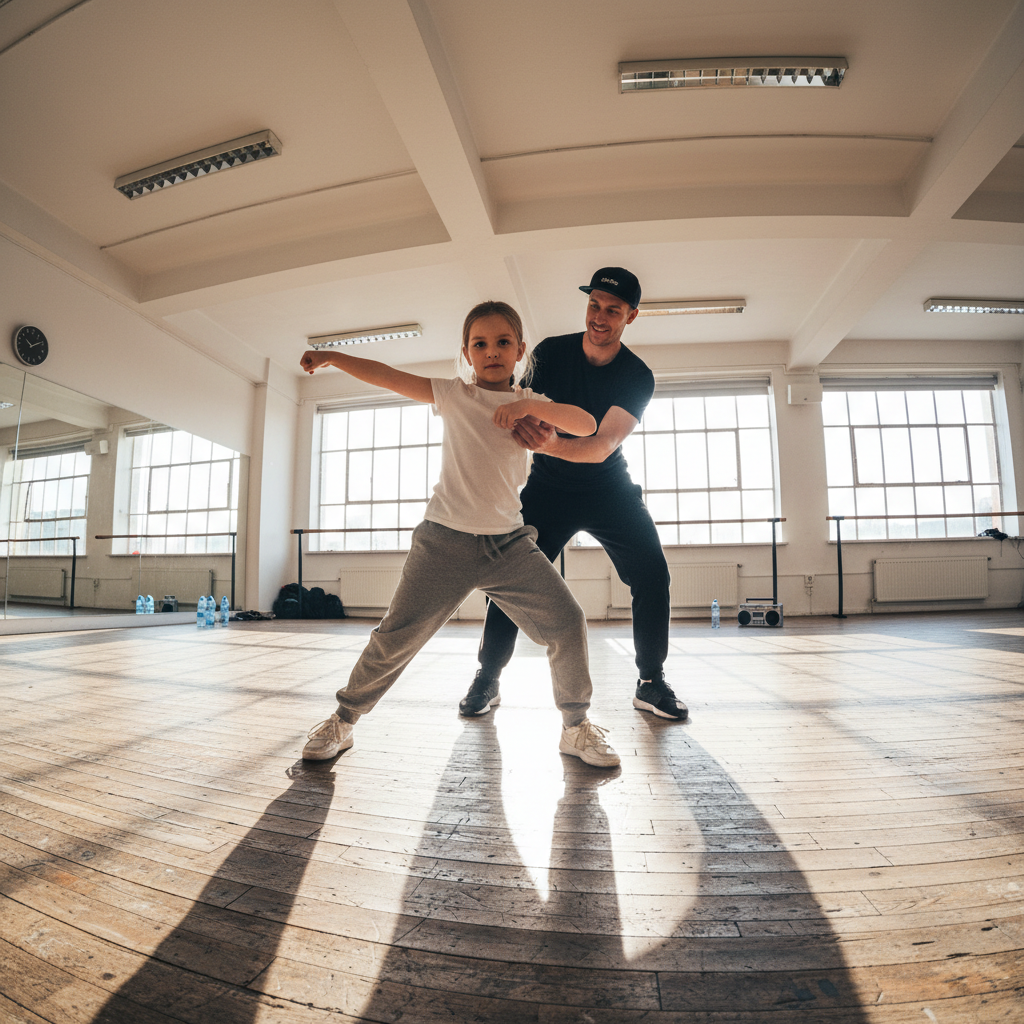
The building block of every routine. Once your kid can count to eight in their sleep, everything else clicks.
"I used to film the whole recital. Now I put my phone down after the first thirty seconds and just watch. Best decision I ever made."
— Dad of a 7-year-old
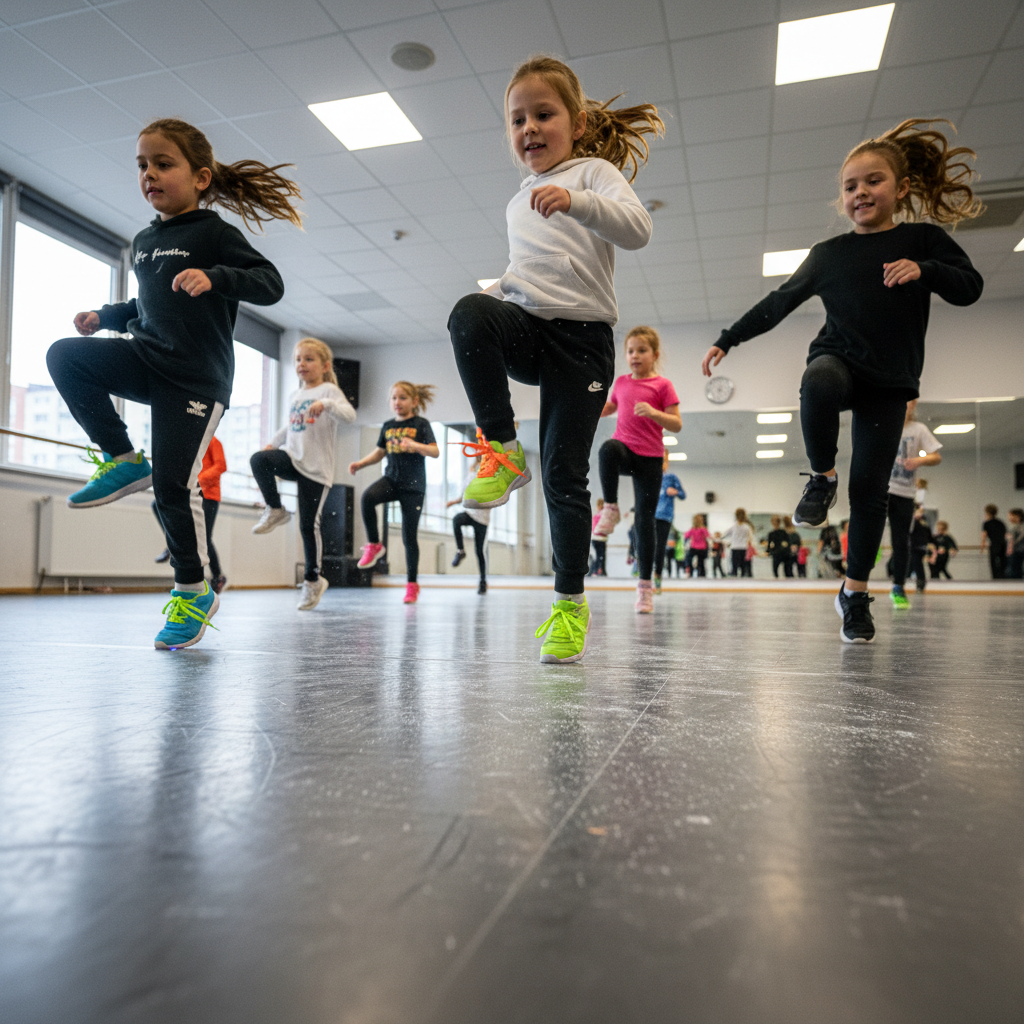
Saturday morning, studio 3. The squeaks you'll hear in your sleep by month two.
Things you'll wish you knew
before that first Saturday
Pinned here from parents who've been through it. Read at pickup, bookmark for later.
What to Pack for First Class
- –Sneakers with non-marking soles (not dress shoes)
- –Water bottle — they will need it
- –Comfortable, moveable clothes (no jeans)
- –A small snack for right after
- –An open mind about "looking silly" — everyone does at first
Good Instructor vs. Great Instructor
- –Good: Teaches the choreography. Great: Explains why each move fits the music.
- –Good: Corrects mistakes. Great: Names what's working first.
- –Good: Runs a tight class. Great: Knows every kid's name by week two.
- –Good: Performs. Great: Teaches students to perform.
What a Cypher Circle Actually Is
- –A circle of dancers who take turns freestyling in the middle
- –No judges, no scores — just expression and encouragement
- –Participants cheer for each other (this is the whole point)
- –Your kid stepping in for 8 counts = huge confidence milestone
- –It's okay to just watch for the first few weeks
Recording Recitals Without Being That Parent
- –Film from the side aisle — you won't block anyone
- –Landscape mode, please
- –One full run-through on video, then put the phone down
- –Your kid will look for your face, not your screen
Questions to Ask Before Enrolling
- –"What's the class size?" (under 12 = more attention)
- –"How do you handle kids who get frustrated?"
- –"Is there a recital? What does it cost?"
- –"Can I watch the first class?"
- –"How long have your instructors been teaching kids specifically?"
The Music Question
- –Good studios use age-appropriate edits — ask if you're unsure
- –Kids often discover music they love through dance class
- –If the lyrics bother you, say something — most teachers will swap
- –The beat matters more than the words at this age
Parents who've been through it
Real words from the bench. Unfiltered, unpaid, unsolicited.
I showed up to the first class with no idea what a 'freeze' was. Three months later I'm Googling footwork tutorials at midnight because I want to understand what my daughter's working on.
The instructor remembered every kid's name by the second class. That told me everything I needed to know about whether we'd found the right place.
My son is autistic. I was nervous about the group dynamic. The cypher circle turned out to be the best thing — he gets to go when he's ready, not when he's called on.
I showed up to the first class with no idea what a 'freeze' was. Three months later I'm Googling footwork tutorials at midnight because I want to understand what my daughter's working on.
The instructor remembered every kid's name by the second class. That told me everything I needed to know about whether we'd found the right place.
My son is autistic. I was nervous about the group dynamic. The cypher circle turned out to be the best thing — he gets to go when he's ready, not when he's called on.
One PDF.
Every question answered.
The Groove Parent Guide is 28 pages of honest, specific, studio-tested knowledge. No fluff, no sponsored content — just what parents actually needed to know.
- 🏠How to choose the right studio (and the 5 questions to ask)
- 🎓What makes a great hip-hop instructor for kids
- 💰Real cost breakdown: class fees, recitals, gear
- 🩺Safety guide — floorwork, joints, and what age for what
- 🎵The four styles explained in plain language
- 🤝How to support your kid without hovering
- 📅Year-one timeline: what to expect month by month
Get the Free Guide
One email. One PDF. No spam, just studio wisdom.